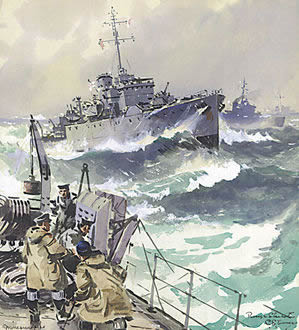
"As
long as in the heart, within,
Our
hope is not yet lost,
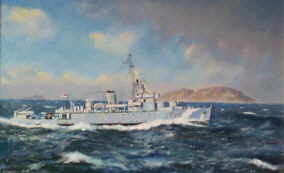
HMS Providence, 2nd Minesweeping Flotilla, off Syrna Island, December 1946,
painted by William Wynn-Werninck
My father joined the Royal Navy in 1928, as a Seaman Boy at HMS Ganges. He spent the entire war on active service, and was at Salerno on the day I was born. He retired in 1961 with the rank of Commander, having been awarded both the MBE and OBE. As Warrant Officer, he served as Signal Bosun in HMS Renown, hunting the German battleship Bismark, and later on the staff of Admiral Sir James Somerville, Commander 'Force H', aboard HMS Ark Royal, tasked with supplying essential reinforcements to the beleaguered island of Malta. Having transferred ashore with the Admiral's staff, he was at Gibraltar on 13th November 1941, when the Ark was sunk by U-81, under the command of Leutnant Friedrich Guggenberger. She sank just 25 miles from Gibraltar, while under tow, with the loss of one man, who apparently went below to collect his best reefer jacket.
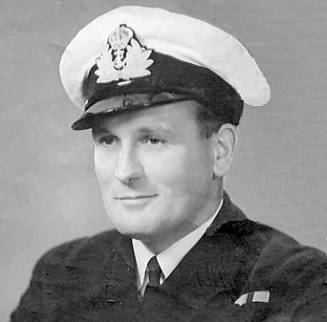
Lieutenant W E Messinger MBE, RN
My Father died in March 1993 and is buried at St Mary's, Stapleford Tawney in Essex, where he married my mother, Doris Padfield, a farmer's daughter, in 1942.
Exodus
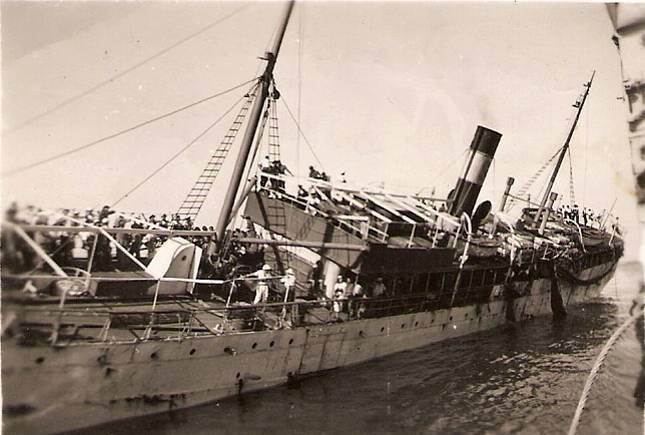
The 'illegal' ship San Demetrio, intercepted by Providence off Palestine, 1st November 1946
The sinking of the illegal ship Athina-Rafah and the rescue of 256 Jewish survivors of the Nazi Holocaust.
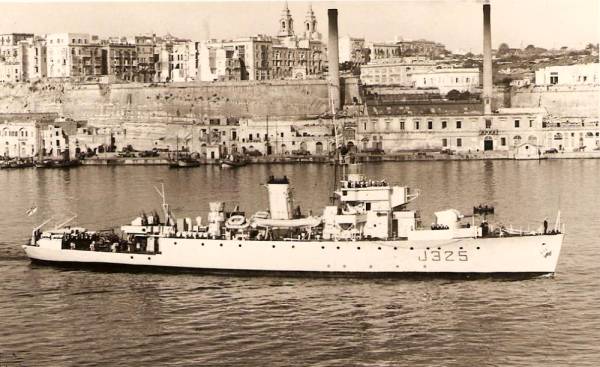
On 8th December 1946, HMS Providence, under the command of Lieutenant William E.Messinger, RN., was First Duty Minesweeper, at one hour's notice for sea in Haifa Harbour. At 2240hrs on 8th December, a signal was received from the Commander-in- Chief Mediterranean, ordering Providence to raise steam and proceed, without further orders and at best speed, to Syrna Island (36°20'N, 26°40'E) where more than seven hundred survivors from the wrecked 'illegal ship' Rafiach (Athina) had come ashore.
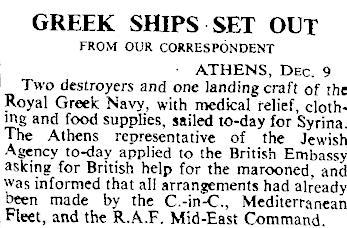
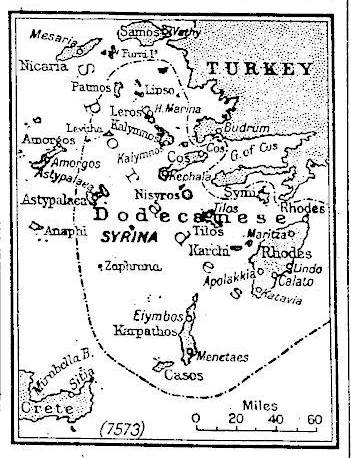
From The Times, 9th December 1946
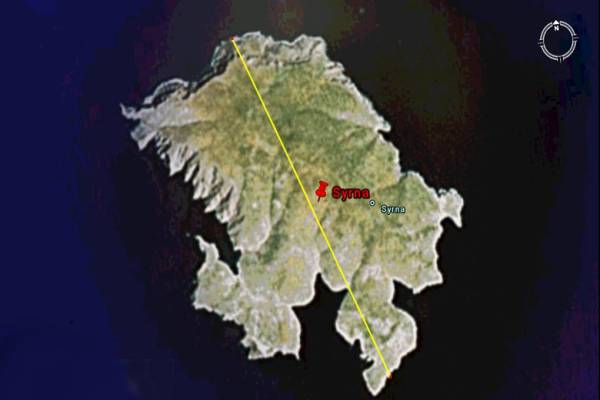
Syrna Island - Google Image
Clearing Haifa at 2330, Providence, passed through the Scarpanto Straits at 0800 10th December, arriving off Port Vathi, Sirna Island, at 1210, where she joined HMS Chevron, HHMS Themistocles and HHMS Aegean.
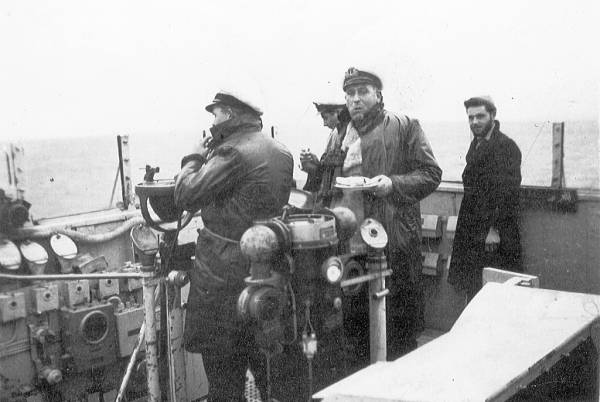
Providence's open bridge, with my father enjoying a sandwich
Due to deteriorating weather conditions, embarkation of survivors by ship's motorboat and whaler, was not able to commence until 2225. On the first run, Providence's whaler capsized alongside, when her passengers panicked. Fortunately, all on board, seven men, six women and two ratings, were rescued.
Athina-Rafah survivors on board Providence
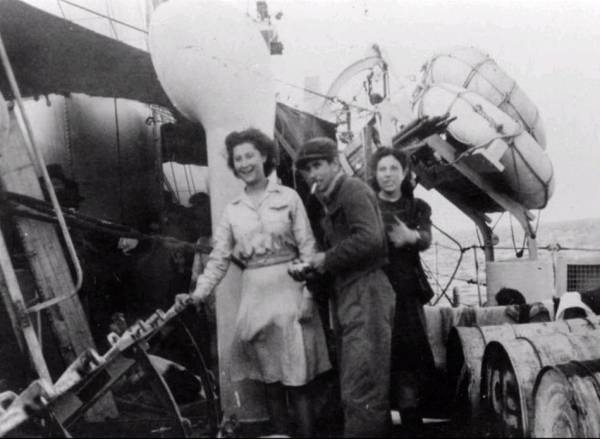
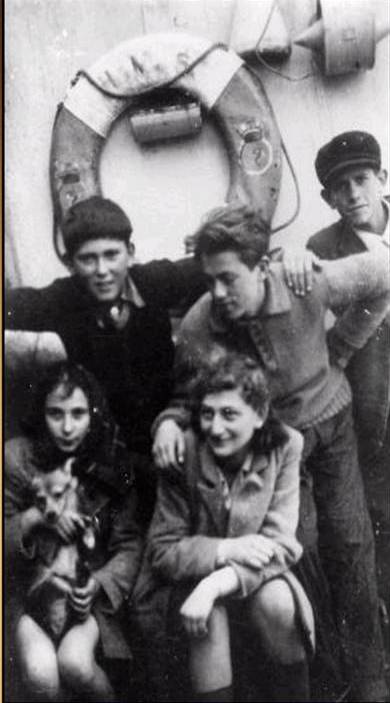
Athina-Rafah survivors on board Providence
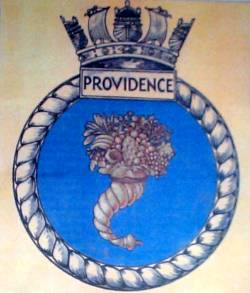
Providence's crest was a cornucopia, a horn of plenty, which can been seen on the lifebuoy above.
At 0350 on 11th December, Providence proceeded independently to Suda bay at 11.5 knots, with 256 Jewish survivors embarked. 17 of them, all suffering from extreme exhaustion, were bedded down in the wardroom, sick bay and captain's cabin.
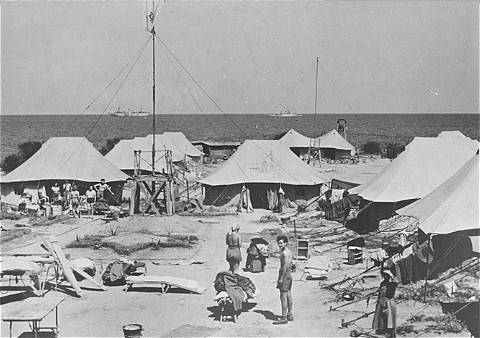
Internment Camp on Cyprus
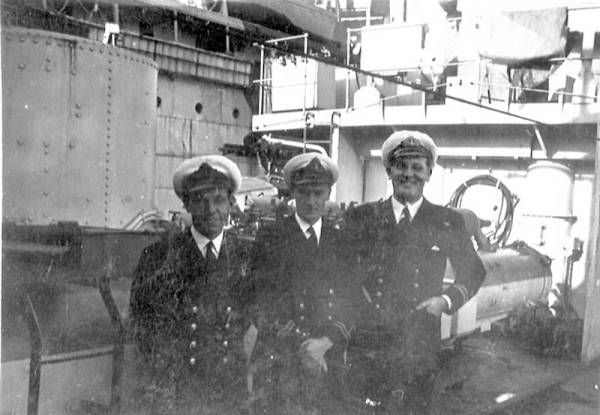
Providence's Officers
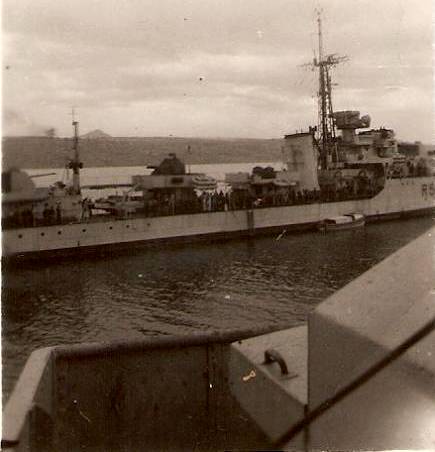
HMS Chevron viewed from Providence.
On passage to Palestine and overloaded with Jewish refugees, Athina-Rafah had been at sea for twelve days when she ran into a storm and sought shelter in Agiou Soassin Bay, on the south coast of Sirna. The ship's anchors failed to hold and she ran onto rocks, but in less than forty minutes she had slipped off into deep water, sinking with the loss of eight lives.
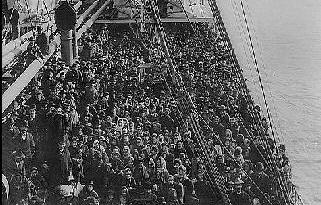
In 1946, Syrna Island had a population of eight: a farmer, known as the 'King of Sirna', his wife and their married children. His proudest possession was a letter of commendation from Viscount Alexander of Tunis, for his co-operation with the Allies during the war. Water was available from two wells, which the farmer allowed the survivors to use, while the Royal Air Force dropped supplies of food, including powdered egg, which seems to have bathed most of the island a bright yellow.
Click the Links to download 'My Father's Story' in English & Hebrew


Recent underwater photographs of the Athina-Rafah.
Click the link to see them...
